Attack the Ball, Force the Fumble, Win the Recovery
August 12, 2026
Attack the Ball, Force the Fumble, Win the Recovery
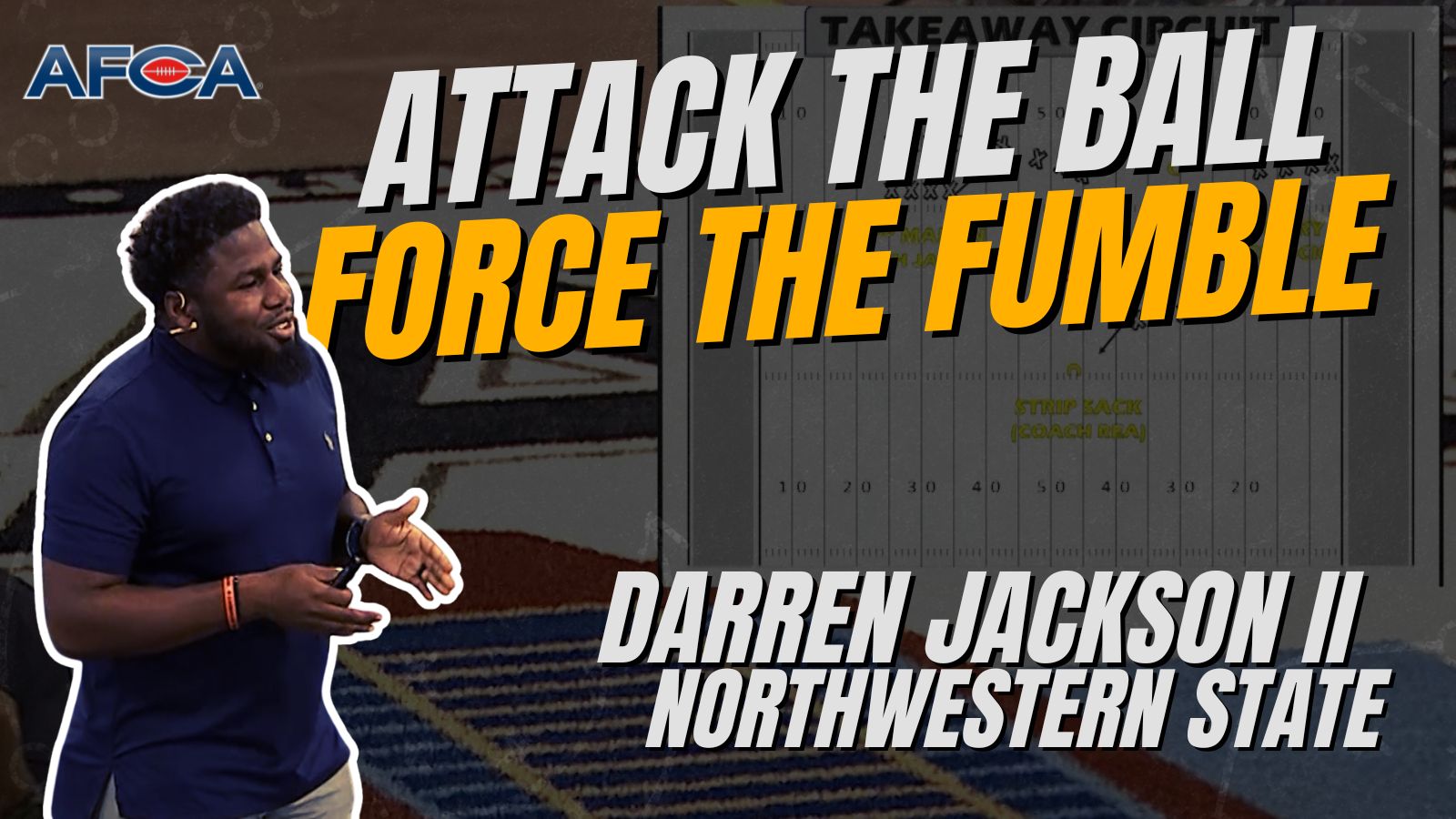
At the 2026 AFCA Convention, current Northwestern State Safeties Coach Darren Jackson II shared the practice habits and coaching techniques he used at Hampton to create takeaways. After placing a major emphasis on forcing fumbles, Hampton finished the season with 12 forced fumbles and nine fumble recoveries.
Jackson’s approach is built around a simple progression: attack the ball, force the fumble, win the recovery. The goal is to develop the belief, technique, and repetition necessary for defenders to force takeaways rather than waiting for the offense to give them away.
Building Ball Disruption into the Defense
Jackson starts by changing the way his players think about turnovers. Hampton refers to them as takeaways because the defense is expected to take the football from the offense actively.
That mentality is developed through repetition. Takeaway techniques are incorporated into circuits, individual periods, 7-on-7, and team work until attacking the football becomes muscle memory.
Jackson also emphasized the importance of the second defender. With the first defender responsible for securing the tackle, the next defender to arrive has an opportunity to attack the football with a punch, rake, or physical strike.
Know Your Opponent
Hampton’s takeaway preparation extends into the film room.
Each week, the staff creates a cutup showing how the upcoming opponent has previously lost the football. Defenders study how individual players carry the ball and where opportunities may exist to attack it.
After a catch, does the receiver immediately secure the ball high and tight? Does a running back allow the football away from his body? Has a ball carrier repeatedly lost possession in a similar situation?
Jackson believes those habits tend to repeat. Showing them to the defense allows players to enter the game already knowing how and when they may be able to attack the football.
Perfect the Craft
Once players understand where opportunities may come from, the next step is developing the technique to capitalize on them.
Hampton alternates tackling and takeaway emphasis throughout the week. Even when the defense has a tackling circuit scheduled, position coaches are expected to incorporate some form of takeaway work into their individual periods.
Jackson highlighted three primary stations in the takeaway circuit.
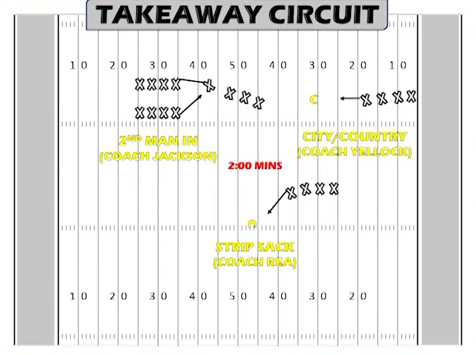
The second-man-in drill begins with one defender securing the ball carrier while another arrives from a different angle. Depending on his position, the second defender works a punch or rake technique. The coaching point is to arrive with effort and physicality because a ball carrier is not simply going to allow a defender to take the football away.
The country or city drill teaches recovery decisions. If the coach calls “city,” the defender treats the area as crowded, gets on the football, and secures the recovery. If the call is “country,” there is open space and the defender scoops the football with an opportunity to score.
The third station focuses on strip sacks. Defenders are taught to secure the quarterback by getting over the opposite shoulder before swiping at the football. Jackson works the technique with defensive linemen, linebackers, and defensive backs, so every player is prepared when a pressure opportunity develops.
The order matters. Secure the tackle or sack first, then attack the football.
Takeaways Continue Into 7-on-7
Jackson does not allow the takeaway emphasis to disappear when the defense moves into team periods.
During 7-on-7, the first defender tags the receiver at the hip after the catch while nearby defenders continue running to the football and attempt to punch or rake it out. The play does not end simply because the receiver made the catch.
The drill benefits both sides. Offensive players are forced to maintain ball security after the catch, while defenders continue practicing ball disruption in a more realistic setting.
Jackson expects that the same techniques emphasized during circuits continue showing up throughout practice.
Emphasize and Recognize the Behavior
For Jackson, emphasizing takeaways also means recognizing players when they execute the techniques correctly.
Forced fumbles, interceptions, and fumble recoveries from both practices and games are highlighted in defensive meetings. Players are recognized in front of their teammates to reinforce the behavior the staff wants repeated.
Hampton also uses what Jackson calls the “Loaf Bus.” Players who fail to pursue the football or miss an opportunity because of poor effort can find themselves featured on it during meetings.

The message is directly connected to takeaway production. A defender who does not run to the football cannot recover a fumble or capitalize on a tipped pass. Pursuit creates opportunities, and every player is expected to finish at the football.
Attack, Force, Recover
Jackson shows that takeaway production is not something a defense can simply demand on game day. It has to be developed throughout the week.
Attack the ball. Force the fumble. Win the recovery.
Hampton reinforces that progression through opponent study, takeaway circuits, individual periods, 7-on-7, teamwork, recognition, and game-film review. The techniques practiced during the week are the same techniques expected to appear on Saturdays.
For Jackson, takeaways do not happen by accident. The defense has to practice creating them, recognize the opportunities when they appear, and finish the play by getting the football back to the offense.
JOIN THE AFCA
Take your coaching development beyond the clinic by joining the American Football Coaches Association. AFCA Membership is open and connects you with coaching education, professional development, resources, and a network of coaches from across the profession.
Make plans to join us in Indianapolis for the 2027 AFCA Convention, February 14–16, and experience three days of education, networking, and opportunities to connect with coaches at every level of the game.
Visit https://www.afca.com/become-a-member/ to become an AFCA member and learn more about the 2027 AFCA Convention.

For more information about the AFCA, visit www.AFCA.com. For more interesting articles, check out The Insider and subscribe to our weekly email.
If you are interested in more in-depth articles and videos, please become an AFCA member. You can find out more information about membership and specific member benefits on the AFCA Membership Overview page. If you are ready to join, please fill out the AFCA Membership Application.
« « Previous PostNext Post » »
Attack the Ball, Force the Fumble, Win the Recovery
At the 2026 AFCA Convention, current Northwestern State Safeties Coach Darren Jackson II shared the practice habits and coaching techniques he used at Hampton to create takeaways. After placing a major emphasis on forcing fumbles, Hampton finished the season with 12 forced fumbles and nine fumble recoveries.
Jackson’s approach is built around a simple progression: attack the ball, force the fumble, win the recovery. The goal is to develop the belief, technique, and repetition necessary for defenders to force takeaways rather than waiting for the offense to give them away.
Building Ball Disruption into the Defense
Jackson starts by changing the way his players think about turnovers. Hampton refers to them as takeaways because the defense is expected to take the football from the offense actively.
That mentality is developed through repetition. Takeaway techniques are incorporated into circuits, individual periods, 7-on-7, and team work until attacking the football becomes muscle memory.
Jackson also emphasized the importance of the second defender. With the first defender responsible for securing the tackle, the next defender to arrive has an opportunity to attack the football with a punch, rake, or physical strike.
Know Your Opponent
Hampton’s takeaway preparation extends into the film room.
Each week, the staff creates a cutup showing how the upcoming opponent has previously lost the football. Defenders study how individual players carry the ball and where opportunities may exist to attack it.
After a catch, does the receiver immediately secure the ball high and tight? Does a running back allow the football away from his body? Has a ball carrier repeatedly lost possession in a similar situation?
Jackson believes those habits tend to repeat. Showing them to the defense allows players to enter the game already knowing how and when they may be able to attack the football.
Perfect the Craft
Once players understand where opportunities may come from, the next step is developing the technique to capitalize on them.
Hampton alternates tackling and takeaway emphasis throughout the week. Even when the defense has a tackling circuit scheduled, position coaches are expected to incorporate some form of takeaway work into their individual periods.
Jackson highlighted three primary stations in the takeaway circuit.
The second-man-in drill begins with one defender securing the ball carrier while another arrives from a different angle. Depending on his position, the second defender works a punch or rake technique. The coaching point is to arrive with effort and physicality because a ball carrier is not simply going to allow a defender to take the football away.
The country or city drill teaches recovery decisions. If the coach calls “city,” the defender treats the area as crowded, gets on the football, and secures the recovery. If the call is “country,” there is open space and the defender scoops the football with an opportunity to score.
The third station focuses on strip sacks. Defenders are taught to secure the quarterback by getting over the opposite shoulder before swiping at the football. Jackson works the technique with defensive linemen, linebackers, and defensive backs, so every player is prepared when a pressure opportunity develops.
The order matters. Secure the tackle or sack first, then attack the football.
Takeaways Continue Into 7-on-7
Jackson does not allow the takeaway emphasis to disappear when the defense moves into team periods.
During 7-on-7, the first defender tags the receiver at the hip after the catch while nearby defenders continue running to the football and attempt to punch or rake it out. The play does not end simply because the receiver made the catch.
The drill benefits both sides. Offensive players are forced to maintain ball security after the catch, while defenders continue practicing ball disruption in a more realistic setting.
Jackson expects that the same techniques emphasized during circuits continue showing up throughout practice.
Emphasize and Recognize the Behavior
For Jackson, emphasizing takeaways also means recognizing players when they execute the techniques correctly.
Forced fumbles, interceptions, and fumble recoveries from both practices and games are highlighted in defensive meetings. Players are recognized in front of their teammates to reinforce the behavior the staff wants repeated.
Hampton also uses what Jackson calls the “Loaf Bus.” Players who fail to pursue the football or miss an opportunity because of poor effort can find themselves featured on it during meetings.
The message is directly connected to takeaway production. A defender who does not run to the football cannot recover a fumble or capitalize on a tipped pass. Pursuit creates opportunities, and every player is expected to finish at the football.
Attack, Force, Recover
Jackson shows that takeaway production is not something a defense can simply demand on game day. It has to be developed throughout the week.
Attack the ball. Force the fumble. Win the recovery.
Hampton reinforces that progression through opponent study, takeaway circuits, individual periods, 7-on-7, teamwork, recognition, and game-film review. The techniques practiced during the week are the same techniques expected to appear on Saturdays.
For Jackson, takeaways do not happen by accident. The defense has to practice creating them, recognize the opportunities when they appear, and finish the play by getting the football back to the offense.
JOIN THE AFCA
Take your coaching development beyond the clinic by joining the American Football Coaches Association. AFCA Membership is open and connects you with coaching education, professional development, resources, and a network of coaches from across the profession.
Make plans to join us in Indianapolis for the 2027 AFCA Convention, February 14–16, and experience three days of education, networking, and opportunities to connect with coaches at every level of the game.
Visit https://www.afca.com/become-a-member/ to become an AFCA member and learn more about the 2027 AFCA Convention.
For more information about the AFCA, visit www.AFCA.com. For more interesting articles, check out The Insider and subscribe to our weekly email.
If you are interested in more in-depth articles and videos, please become an AFCA member. You can find out more information about membership and specific member benefits on the AFCA Membership Overview page. If you are ready to join, please fill out the AFCA Membership Application.