Building an Efficient Offensive Game Plan Through Organization and Situational Football
August 5, 2026
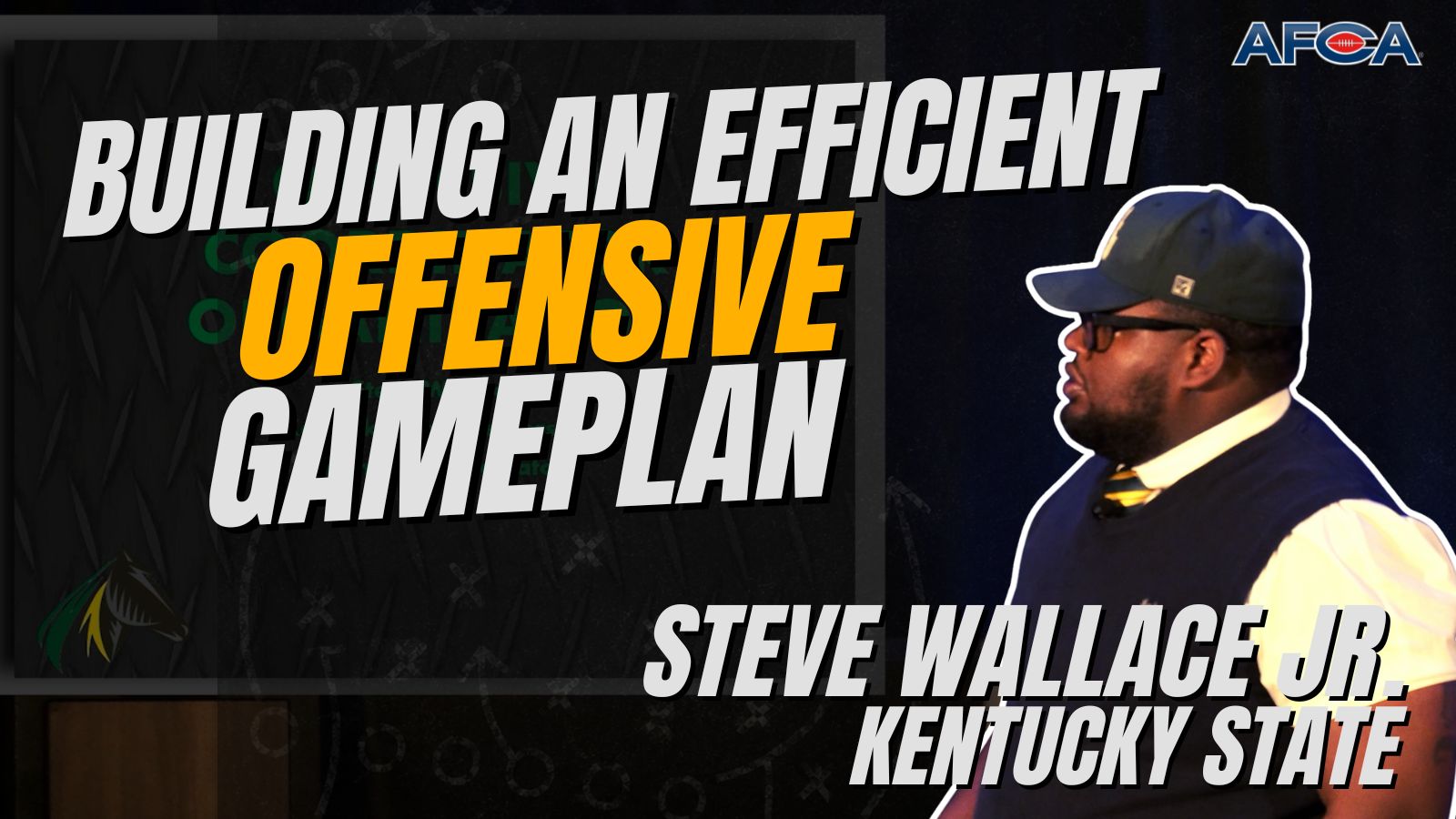
At the 2026 AFCA Convention, Kentucky State Offensive Coordinator Steve Wallace Jr. shared the organizational process behind building an efficient offensive game plan. Rather than focusing on a single offensive concept, Wallace centered his presentation on creating a weekly system that simplifies game planning, play calling, and communication on Saturdays.
Throughout the clinic, Wallace emphasized that successful coordinators are not simply good play designers. They are organized teachers who prepare themselves and their players to make confident decisions throughout the week and on game day.
Building a Directional Call Sheet
One of his first teaching points focused on how Kentucky State organizes its offensive call sheet.
Rather than building separate plans for every possible situation, Wallace structures the offense around field direction and hash location. Organizing calls this way allows the staff to quickly flip formations and concepts without rebuilding the game plan during the week.
Although creating the system requires additional work early in the week, Wallace explained that the payoff comes on game day when adjustments can be made quickly and communication remains consistent.
The objective is simple. Spend more time coaching players and less time searching for the next play.
Becoming a Situational Master
Wallace described situational football as one of the most important responsibilities of an offensive coordinator.
Before watching film, Kentucky State studies down-and-distance tendencies to determine where opponents are most vulnerable. Rather than treating every situation equally, the staff identifies which situations occur most frequently and prioritizes practice time accordingly.
By studying those percentages before diving into film, coaches can begin understanding the personality of the defense they are preparing to face.
For example, if an opponent consistently creates second-and-short situations, that often reveals struggles defending first down. Likewise, a high percentage of third-and-medium situations may indicate aggressive defensive tendencies that influence the offensive game plan.
Instead of preparing equally for every possibility, Wallace encourages coaches to devote the most attention to situations players are most likely to encounter.
Let the Numbers Guide Preparation
Wallace challenged coaches to use data as a guide rather than simply collecting information.
By breaking down expected series, normal down and distance, red zone opportunities, and other game situations, Kentucky State estimates how often each scenario is likely to occur during a game.
Those projections help determine where practice time should be spent throughout the week.
Rather than overloading players with every possible call, Wallace believes practice should reflect the situations most likely to determine the outcome on Saturday.
Simplifying Game Day Communication
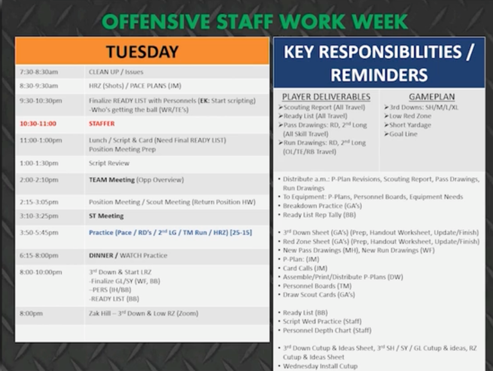
As the week progresses, Wallace works to simplify communication for both coaches and players.
Call sheets are designed so coaches can quickly locate concepts, adjust, and communicate efficiently without wasting valuable time between plays. The more organized the preparation throughout the week, the less stress exists on game day.
Wallace also encourages offensive staffs to finalize as much of the game plan as possible before Saturday morning. Eliminating last-minute changes allows coaches to focus on execution rather than continuing to build the call sheet.
For Wallace, preparation creates confidence.
Applying the Game Plan
To close the presentation, Wallace used game film to demonstrate how preparation translates into production.
One example featured Kentucky State’s use of Duo, which Wallace described as “power without a pull.” The concept allows the offensive line to create vertical movement while giving the running back a second-level read based on the play-side linebacker.
The tight end is coached to secure the C gap by pinning the defensive end inside, allowing the running back to read the linebacker. If the linebacker fits inside, the back bounces outside. If the linebacker flows outside, the run stays inside.
Wallace explained that after studying an opponent’s struggles defending Duo earlier in the season, Kentucky State installed the concept as its opening play. The preparation paid off with a 75-yard touchdown run that validated the staff’s film study and weekly planning.
The example reinforced one of the biggest messages of the clinic: successful game plans are built long before kickoff through detailed preparation and organized teaching.
Preparation Creates Confidence
Wallace’s presentation demonstrated that offensive success begins with organization.
By building efficient call sheets, emphasizing situational football, and allowing data to guide weekly preparation, Kentucky State creates game plans that are easier for coaches to call and easier for players to execute.
Rather than searching for the perfect play, Wallace encourages coaches to develop a repeatable process that prepares everyone in the program to perform with confidence when game day arrives.
JOIN THE AFCA
Take your coaching development beyond the clinic by joining the American Football Coaches Association. AFCA Membership is open and connects you with coaching education, professional development, resources, and a network of coaches from across the profession.
Make plans to join us in Indianapolis for the 2027 AFCA Convention, February 14–16, and experience three days of education, networking, and opportunities to connect with coaches at every level of the game.
Visit https://www.afca.com/become-a-member/ to become an AFCA member and learn more about the 2027 AFCA Convention.

For more information about the AFCA, visit www.AFCA.com. For more interesting articles, check out The Insider and subscribe to our weekly email.
If you are interested in more in-depth articles and videos, please become an AFCA member. You can find out more information about membership and specific member benefits on the AFCA Membership Overview page. If you are ready to join, please fill out the AFCA Membership Application.
« « Previous PostNext Post » »
At the 2026 AFCA Convention, Kentucky State Offensive Coordinator Steve Wallace Jr. shared the organizational process behind building an efficient offensive game plan. Rather than focusing on a single offensive concept, Wallace centered his presentation on creating a weekly system that simplifies game planning, play calling, and communication on Saturdays.
Throughout the clinic, Wallace emphasized that successful coordinators are not simply good play designers. They are organized teachers who prepare themselves and their players to make confident decisions throughout the week and on game day.
Building a Directional Call Sheet
One of his first teaching points focused on how Kentucky State organizes its offensive call sheet.
Rather than building separate plans for every possible situation, Wallace structures the offense around field direction and hash location. Organizing calls this way allows the staff to quickly flip formations and concepts without rebuilding the game plan during the week.
Although creating the system requires additional work early in the week, Wallace explained that the payoff comes on game day when adjustments can be made quickly and communication remains consistent.
The objective is simple. Spend more time coaching players and less time searching for the next play.
Becoming a Situational Master
Wallace described situational football as one of the most important responsibilities of an offensive coordinator.
Before watching film, Kentucky State studies down-and-distance tendencies to determine where opponents are most vulnerable. Rather than treating every situation equally, the staff identifies which situations occur most frequently and prioritizes practice time accordingly.
By studying those percentages before diving into film, coaches can begin understanding the personality of the defense they are preparing to face.
For example, if an opponent consistently creates second-and-short situations, that often reveals struggles defending first down. Likewise, a high percentage of third-and-medium situations may indicate aggressive defensive tendencies that influence the offensive game plan.
Instead of preparing equally for every possibility, Wallace encourages coaches to devote the most attention to situations players are most likely to encounter.
Let the Numbers Guide Preparation
Wallace challenged coaches to use data as a guide rather than simply collecting information.
By breaking down expected series, normal down and distance, red zone opportunities, and other game situations, Kentucky State estimates how often each scenario is likely to occur during a game.
Those projections help determine where practice time should be spent throughout the week.
Rather than overloading players with every possible call, Wallace believes practice should reflect the situations most likely to determine the outcome on Saturday.
Simplifying Game Day Communication
As the week progresses, Wallace works to simplify communication for both coaches and players.
Call sheets are designed so coaches can quickly locate concepts, adjust, and communicate efficiently without wasting valuable time between plays. The more organized the preparation throughout the week, the less stress exists on game day.
Wallace also encourages offensive staffs to finalize as much of the game plan as possible before Saturday morning. Eliminating last-minute changes allows coaches to focus on execution rather than continuing to build the call sheet.
For Wallace, preparation creates confidence.
Applying the Game Plan
To close the presentation, Wallace used game film to demonstrate how preparation translates into production.
One example featured Kentucky State’s use of Duo, which Wallace described as “power without a pull.” The concept allows the offensive line to create vertical movement while giving the running back a second-level read based on the play-side linebacker.
The tight end is coached to secure the C gap by pinning the defensive end inside, allowing the running back to read the linebacker. If the linebacker fits inside, the back bounces outside. If the linebacker flows outside, the run stays inside.
Wallace explained that after studying an opponent’s struggles defending Duo earlier in the season, Kentucky State installed the concept as its opening play. The preparation paid off with a 75-yard touchdown run that validated the staff’s film study and weekly planning.
The example reinforced one of the biggest messages of the clinic: successful game plans are built long before kickoff through detailed preparation and organized teaching.
Preparation Creates Confidence
Wallace’s presentation demonstrated that offensive success begins with organization.
By building efficient call sheets, emphasizing situational football, and allowing data to guide weekly preparation, Kentucky State creates game plans that are easier for coaches to call and easier for players to execute.
Rather than searching for the perfect play, Wallace encourages coaches to develop a repeatable process that prepares everyone in the program to perform with confidence when game day arrives.
JOIN THE AFCA
Take your coaching development beyond the clinic by joining the American Football Coaches Association. AFCA Membership is open and connects you with coaching education, professional development, resources, and a network of coaches from across the profession.
Make plans to join us in Indianapolis for the 2027 AFCA Convention, February 14–16, and experience three days of education, networking, and opportunities to connect with coaches at every level of the game.
Visit https://www.afca.com/become-a-member/ to become an AFCA member and learn more about the 2027 AFCA Convention.
For more information about the AFCA, visit www.AFCA.com. For more interesting articles, check out The Insider and subscribe to our weekly email.
If you are interested in more in-depth articles and videos, please become an AFCA member. You can find out more information about membership and specific member benefits on the AFCA Membership Overview page. If you are ready to join, please fill out the AFCA Membership Application.