Developing Productive Wide Receivers Through Fundamentals and Purposeful Practice
July 29, 2026
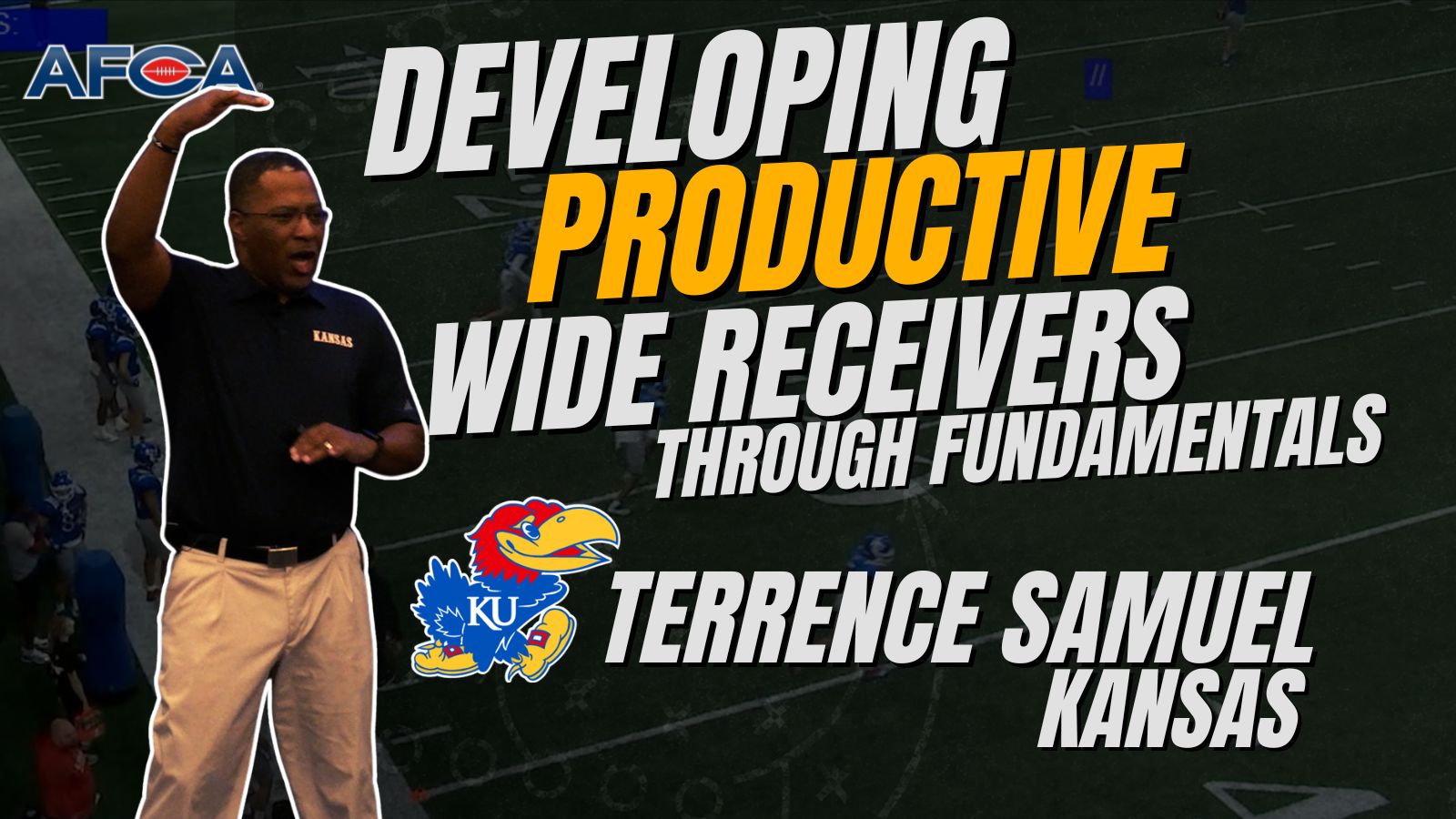
At the 2026 AFCA Convention, Coach Terrence Samuel shared the teaching progression he uses to develop productive wide receivers. Rather than relying on elaborate drills or trends, Samuel emphasized mastering the fundamentals that consistently appear on Saturdays.
Throughout the clinic, he reinforced a simple message: every drill should have a purpose, every coaching point should translate to the game, and production is the result of consistently executing the details.
Production Starts with Fundamentals
Samuel opened by explaining that wide receiver play is ultimately judged by production. Because individual periods are limited, coaches must spend their time developing the skills players actually need instead of chasing drills that simply look good.
If receivers struggle to catch the football, they work catching drills. If their footwork at the top of routes needs improvement, practice shifts to route mechanics. Every drill should directly address an area that will improve game performance.
Samuel challenged coaches to constantly evaluate whether a drill appears on film during games. If it does not translate to Saturdays, it likely does not belong in practice.
Building Complete Wide Receivers
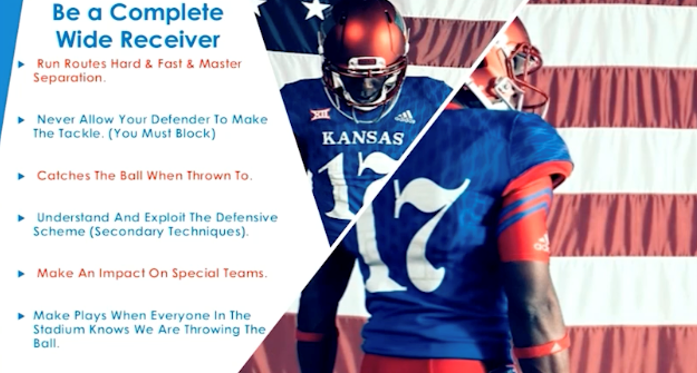
Before diving into technique, Samuel defined what it means to be a complete receiver.
A complete receiver understands how to separate during routes, refuses to let the defender covering him make the tackle, blocks with effort, contributes on special teams, and understands the game beyond simply running routes.
He also challenges players to compete with a relentless mindset.
Using the analogy of a dragon versus a rabbit, Samuel encourages his receivers to play aggressively from the opening snap until the whistle. Whether running routes, blocking, or chasing the football, he wants receivers competing with confidence and physicality rather than hesitation.
Accountability Drives Improvement
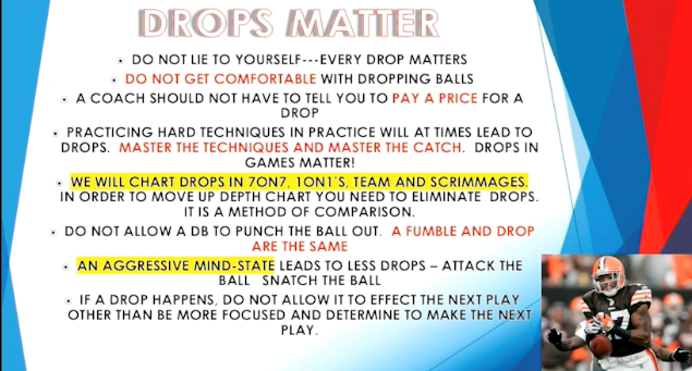
Samuel believes players improve when performance is measured.
Throughout the season, he tracks catches, drops, missed assignments, and a statistic he calls “Your Man Made the Tackle” (YMMT). Every time the defender responsible for covering a receiver makes the tackle after a catch, it is documented and reviewed.
The statistic reinforces that receivers should create explosive plays after the catch instead of settling for simply securing the football.
Another expectation is “escort the ball to the end zone.” Whether a receiver catches the pass or not, Samuel wants every player sprinting downfield to finish blocks and celebrate with the ball carrier in the end zone.
Embracing Every Opportunity
Samuel also challenged coaches to expect more from their receivers by involving them on special teams.
Rather than viewing special teams as secondary, he believes it provides another opportunity for receivers to demonstrate toughness, effort, and value. He pointed to players who increased their professional opportunities because they embraced special teams responsibilities in addition to producing offensively.
Beyond special teams, Samuel wants receivers to understand defensive coverages, offensive concepts, and route adjustments so they are prepared to communicate football knowledge at the next level.
Coaching the Catch
The technical portion of the presentation began with catching mechanics.
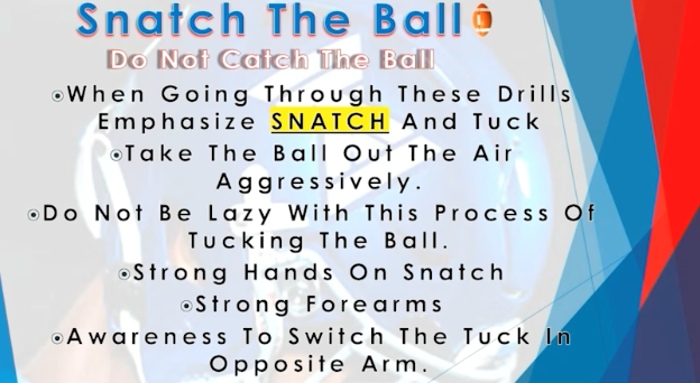
Samuel teaches receivers to “snatch” the football rather than simply catch it. Players are coached to aggressively attack the football with their hands, squeeze the ball firmly, and immediately pull it into the tuck.
According to Samuel, receivers who actively snatch the football experience fewer drops because they are attacking the ball instead of waiting for it to arrive.
Another key teaching point is changing the catch point.
Receivers accomplish this by attacking the football with both their feet and their hands. Working back toward the throw while extending to the football shortens the defender’s reaction time and creates a larger throwing window for the quarterback.
The goal is to prevent defenders from driving through the catch point by making the reception farther away from the defender’s leverage.
Building Routes from the Ground Up
After establishing catching fundamentals, Samuel transitioned into route construction.
He teaches every route as a progression beginning with the release, followed by the vertical stem, the separation point, and finally the catch.
Each phase serves a specific purpose.
The release establishes leverage against the defender. The vertical stem forces defensive backs to respect the deep threat while maximizing speed. Once the receiver reaches the appropriate depth, the focus shifts to creating separation before attacking the football.
By breaking every route into teachable phases, receivers develop consistency regardless of the route concept.
Fundamentals Produce Results
Samuel’s presentation demonstrated that productive receivers are developed through consistent attention to fundamentals rather than complicated drills.
By emphasizing accountability, purposeful practice, aggressive catching techniques, and a structured approach to route running, he creates receivers prepared to impact the game in multiple ways. His message remained consistent throughout the clinic: coach the fundamentals every day, demand production from those fundamentals, and trust that disciplined habits will consistently show up on Saturdays.
Take your coaching development beyond the clinic by joining the American Football Coaches Association. AFCA Membership is open and connects you with coaching education, professional development, resources, and a network of coaches from across the profession.
Make plans to join us in Indianapolis for the 2027 AFCA Convention, February 14–16, and experience three days of education, networking, and opportunities to connect with coaches at every level of the game.
Visit afca.com to become an AFCA member and learn more about the 2027 AFCA Convention.

For more information about the AFCA, visit www.AFCA.com. For more interesting articles, check out The Insider and subscribe to our weekly email.
If you are interested in more in-depth articles and videos, please become an AFCA member. You can find out more information about membership and specific member benefits on the AFCA Membership Overview page. If you are ready to join, please fill out the AFCA Membership Application.
« « Previous PostNext Post » »
At the 2026 AFCA Convention, Coach Terrence Samuel shared the teaching progression he uses to develop productive wide receivers. Rather than relying on elaborate drills or trends, Samuel emphasized mastering the fundamentals that consistently appear on Saturdays.
Throughout the clinic, he reinforced a simple message: every drill should have a purpose, every coaching point should translate to the game, and production is the result of consistently executing the details.
Production Starts with Fundamentals
Samuel opened by explaining that wide receiver play is ultimately judged by production. Because individual periods are limited, coaches must spend their time developing the skills players actually need instead of chasing drills that simply look good.
If receivers struggle to catch the football, they work catching drills. If their footwork at the top of routes needs improvement, practice shifts to route mechanics. Every drill should directly address an area that will improve game performance.
Samuel challenged coaches to constantly evaluate whether a drill appears on film during games. If it does not translate to Saturdays, it likely does not belong in practice.
Building Complete Wide Receivers
Before diving into technique, Samuel defined what it means to be a complete receiver.
A complete receiver understands how to separate during routes, refuses to let the defender covering him make the tackle, blocks with effort, contributes on special teams, and understands the game beyond simply running routes.
He also challenges players to compete with a relentless mindset.
Using the analogy of a dragon versus a rabbit, Samuel encourages his receivers to play aggressively from the opening snap until the whistle. Whether running routes, blocking, or chasing the football, he wants receivers competing with confidence and physicality rather than hesitation.
Accountability Drives Improvement
Samuel believes players improve when performance is measured.
Throughout the season, he tracks catches, drops, missed assignments, and a statistic he calls “Your Man Made the Tackle” (YMMT). Every time the defender responsible for covering a receiver makes the tackle after a catch, it is documented and reviewed.
The statistic reinforces that receivers should create explosive plays after the catch instead of settling for simply securing the football.
Another expectation is “escort the ball to the end zone.” Whether a receiver catches the pass or not, Samuel wants every player sprinting downfield to finish blocks and celebrate with the ball carrier in the end zone.
Embracing Every Opportunity
Samuel also challenged coaches to expect more from their receivers by involving them on special teams.
Rather than viewing special teams as secondary, he believes it provides another opportunity for receivers to demonstrate toughness, effort, and value. He pointed to players who increased their professional opportunities because they embraced special teams responsibilities in addition to producing offensively.
Beyond special teams, Samuel wants receivers to understand defensive coverages, offensive concepts, and route adjustments so they are prepared to communicate football knowledge at the next level.
Coaching the Catch
The technical portion of the presentation began with catching mechanics.
Samuel teaches receivers to “snatch” the football rather than simply catch it. Players are coached to aggressively attack the football with their hands, squeeze the ball firmly, and immediately pull it into the tuck.
According to Samuel, receivers who actively snatch the football experience fewer drops because they are attacking the ball instead of waiting for it to arrive.
Another key teaching point is changing the catch point.
Receivers accomplish this by attacking the football with both their feet and their hands. Working back toward the throw while extending to the football shortens the defender’s reaction time and creates a larger throwing window for the quarterback.
The goal is to prevent defenders from driving through the catch point by making the reception farther away from the defender’s leverage.
Building Routes from the Ground Up
After establishing catching fundamentals, Samuel transitioned into route construction.
He teaches every route as a progression beginning with the release, followed by the vertical stem, the separation point, and finally the catch.
Each phase serves a specific purpose.
The release establishes leverage against the defender. The vertical stem forces defensive backs to respect the deep threat while maximizing speed. Once the receiver reaches the appropriate depth, the focus shifts to creating separation before attacking the football.
By breaking every route into teachable phases, receivers develop consistency regardless of the route concept.
Fundamentals Produce Results
Samuel’s presentation demonstrated that productive receivers are developed through consistent attention to fundamentals rather than complicated drills.
By emphasizing accountability, purposeful practice, aggressive catching techniques, and a structured approach to route running, he creates receivers prepared to impact the game in multiple ways. His message remained consistent throughout the clinic: coach the fundamentals every day, demand production from those fundamentals, and trust that disciplined habits will consistently show up on Saturdays.
Take your coaching development beyond the clinic by joining the American Football Coaches Association. AFCA Membership is open and connects you with coaching education, professional development, resources, and a network of coaches from across the profession.
Make plans to join us in Indianapolis for the 2027 AFCA Convention, February 14–16, and experience three days of education, networking, and opportunities to connect with coaches at every level of the game.
Visit afca.com to become an AFCA member and learn more about the 2027 AFCA Convention.
For more information about the AFCA, visit www.AFCA.com. For more interesting articles, check out The Insider and subscribe to our weekly email.
If you are interested in more in-depth articles and videos, please become an AFCA member. You can find out more information about membership and specific member benefits on the AFCA Membership Overview page. If you are ready to join, please fill out the AFCA Membership Application.