Coach Tre Bell’s Defensive Back Philosophy
June 29, 2026
Introduction and Core Evaluation Strategy
At the 2026 AFCA Convention in Charlotte, NC, Charlotte passing game coordinator Tre’ Bell shared his defensive back philosophy, detailing evaluating, training, and executing elite defensive back play. His presentation established that a structural technique combined with an aggressive mentality forms the baseline of effective perimeter defense.
The Myth of the Pure Cover Corner
Coach Bell emphasized that the concept of a pure cover corner is obsolete. Modern offensive schemes are designed to isolate perimeter defenders. Defensive backs must be willing tacklers in both open and confined spaces, combining lateral quickness with proper instincts.
The primary prerequisite for a defensive back is the courage to make contact. This trait defines a player’s willingness to engage physically, establish leverage on the perimeter, and participate in run support. With offenses prioritizing putting the ball on the perimeter through both run and pass schemes, physical block destruction and a commitment to keeping the ball inside and on a predictable path for interior pursuit is more important than ever.
Physical Profiles and Instinctual Requirements
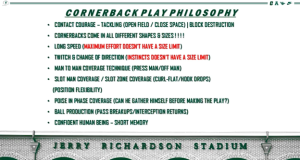
Physical traits such as height and long arms are advantageous, but defensive backs can achieve productivity in all shapes and sizes. Successful starters have ranged from five feet seven inches to over six feet three inches. Physical height must never overshadow instincts, spatial awareness, and change of direction quickness. For instance, top-tier programs have found success utilizing smaller corners who possess elite toughness and localized twitch.
When evaluating long speed, the primary metric on tape is effort. A consistent tracking speed across vertical routes indicates the necessary discipline required for deep coverage. Additionally, multi-sport backgrounds, including basketball, baseball, and track, significantly enhance positional instincts. These sports cultivate natural mechanics for body balance, deep ball tracking, and reactive spatial orientation.
The Four Wills of Cornerback Play
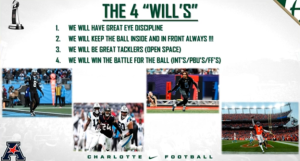
- Great Eye Discipline: Maintaining visual focus on designated keys rather than drifting toward backfield distractions, applicable across both man and zone coverages.
- Keeping the Ball Inside and in Front: Preserving leverage at all costs to limit explosive offensive plays and channel perimeter concepts back toward structural pursuit.
- Being a Great Tackler: Demonstrating technical efficiency in open space to minimize yards after catch and limit standard gains.
- Winning the Battle for the Ball: Converting targets into ball production through pass breakups (PBUs) and interceptions, tracking elite physical models like JC Horn, Derek Stingley, Jalen Ramsey, and Pat Surtain.
The Structured Practice Methodology
Player development requires a deliberate practice schedule that maximizes time on task. A standard Indy period must be optimized through three phases every single day, adhering to the principle that mastery requires continuous repetition.
- Pre-Practice Walkthrough Period
Executed immediately following team meetings, this segment functions as a controlled walkthrough tempo without helmets. The focus centers on movement muscle memory, mechanical footwork (pedal and shuffle progressions), and game plan-specific alignments using mock indicators (cans). This slower pace allows players to process schematic rules and slow the game down mentally before physical exertion.
- Practice Individual Period
A high-intensity, full-speed block typically spans twelve minutes. This period isolates functional game mechanics: footwork transitions, block destruction mechanics, open field tackling drills, and specific coverage concept rules (such as Palms, Cover 3, or adjustments to stacks and bunches). A core drill utilized here is “Snatch a Chain,” which emphasizes striking a blocker, shedding cleanly, and locating the ball carrier simultaneously.
- Post-Practice Refinement Period
Returning to a walkthrough tempo, this period focuses on specific technical corrections and man coverage mechanics across three distinct depth zones: level one (zero to five yards), level two (six to fifteen yards), and level three (deep downfield finishes). This time is also used to troubleshoot schematic issues encountered during the week, such as triple option responsibilities or unusual splits.
To continue learning from presentations like Coach Tre Bell’s and gain access to year-round professional development resources, consider becoming a member of the American Football Coaches Association. AFCA membership provides coaches with access to the AFCA Digital Library, exclusive educational content, networking opportunities, career resources, and the annual AFCA Convention. Membership opens July 1st, giving coaches at every level the opportunity to learn from some of the game’s top educators and continue developing their programs and careers.

For more information about the AFCA, visit www.AFCA.com. For more interesting articles, check out The Insider and subscribe to our weekly email.
If you are interested in more in-depth articles and videos, please become an AFCA member. You can find out more information about membership and specific member benefits on the AFCA Membership Overview page. If you are ready to join, please fill out the AFCA Membership Application.
« « Previous PostNext Post » »
Introduction and Core Evaluation Strategy
At the 2026 AFCA Convention in Charlotte, NC, Charlotte passing game coordinator Tre’ Bell shared his defensive back philosophy, detailing evaluating, training, and executing elite defensive back play. His presentation established that a structural technique combined with an aggressive mentality forms the baseline of effective perimeter defense.
The Myth of the Pure Cover Corner
Coach Bell emphasized that the concept of a pure cover corner is obsolete. Modern offensive schemes are designed to isolate perimeter defenders. Defensive backs must be willing tacklers in both open and confined spaces, combining lateral quickness with proper instincts.
The primary prerequisite for a defensive back is the courage to make contact. This trait defines a player’s willingness to engage physically, establish leverage on the perimeter, and participate in run support. With offenses prioritizing putting the ball on the perimeter through both run and pass schemes, physical block destruction and a commitment to keeping the ball inside and on a predictable path for interior pursuit is more important than ever.
Physical Profiles and Instinctual Requirements
Physical traits such as height and long arms are advantageous, but defensive backs can achieve productivity in all shapes and sizes. Successful starters have ranged from five feet seven inches to over six feet three inches. Physical height must never overshadow instincts, spatial awareness, and change of direction quickness. For instance, top-tier programs have found success utilizing smaller corners who possess elite toughness and localized twitch.
When evaluating long speed, the primary metric on tape is effort. A consistent tracking speed across vertical routes indicates the necessary discipline required for deep coverage. Additionally, multi-sport backgrounds, including basketball, baseball, and track, significantly enhance positional instincts. These sports cultivate natural mechanics for body balance, deep ball tracking, and reactive spatial orientation.
The Four Wills of Cornerback Play
- Great Eye Discipline: Maintaining visual focus on designated keys rather than drifting toward backfield distractions, applicable across both man and zone coverages.
- Keeping the Ball Inside and in Front: Preserving leverage at all costs to limit explosive offensive plays and channel perimeter concepts back toward structural pursuit.
- Being a Great Tackler: Demonstrating technical efficiency in open space to minimize yards after catch and limit standard gains.
- Winning the Battle for the Ball: Converting targets into ball production through pass breakups (PBUs) and interceptions, tracking elite physical models like JC Horn, Derek Stingley, Jalen Ramsey, and Pat Surtain.
The Structured Practice Methodology
Player development requires a deliberate practice schedule that maximizes time on task. A standard Indy period must be optimized through three phases every single day, adhering to the principle that mastery requires continuous repetition.
- Pre-Practice Walkthrough Period
Executed immediately following team meetings, this segment functions as a controlled walkthrough tempo without helmets. The focus centers on movement muscle memory, mechanical footwork (pedal and shuffle progressions), and game plan-specific alignments using mock indicators (cans). This slower pace allows players to process schematic rules and slow the game down mentally before physical exertion.
- Practice Individual Period
A high-intensity, full-speed block typically spans twelve minutes. This period isolates functional game mechanics: footwork transitions, block destruction mechanics, open field tackling drills, and specific coverage concept rules (such as Palms, Cover 3, or adjustments to stacks and bunches). A core drill utilized here is “Snatch a Chain,” which emphasizes striking a blocker, shedding cleanly, and locating the ball carrier simultaneously.
- Post-Practice Refinement Period
Returning to a walkthrough tempo, this period focuses on specific technical corrections and man coverage mechanics across three distinct depth zones: level one (zero to five yards), level two (six to fifteen yards), and level three (deep downfield finishes). This time is also used to troubleshoot schematic issues encountered during the week, such as triple option responsibilities or unusual splits.
To continue learning from presentations like Coach Tre Bell’s and gain access to year-round professional development resources, consider becoming a member of the American Football Coaches Association. AFCA membership provides coaches with access to the AFCA Digital Library, exclusive educational content, networking opportunities, career resources, and the annual AFCA Convention. Membership opens July 1st, giving coaches at every level the opportunity to learn from some of the game’s top educators and continue developing their programs and careers.
For more information about the AFCA, visit www.AFCA.com. For more interesting articles, check out The Insider and subscribe to our weekly email.
If you are interested in more in-depth articles and videos, please become an AFCA member. You can find out more information about membership and specific member benefits on the AFCA Membership Overview page. If you are ready to join, please fill out the AFCA Membership Application.