A Teaching Progression: Mastering the Long-Arm Pass Rush
May 13, 2026
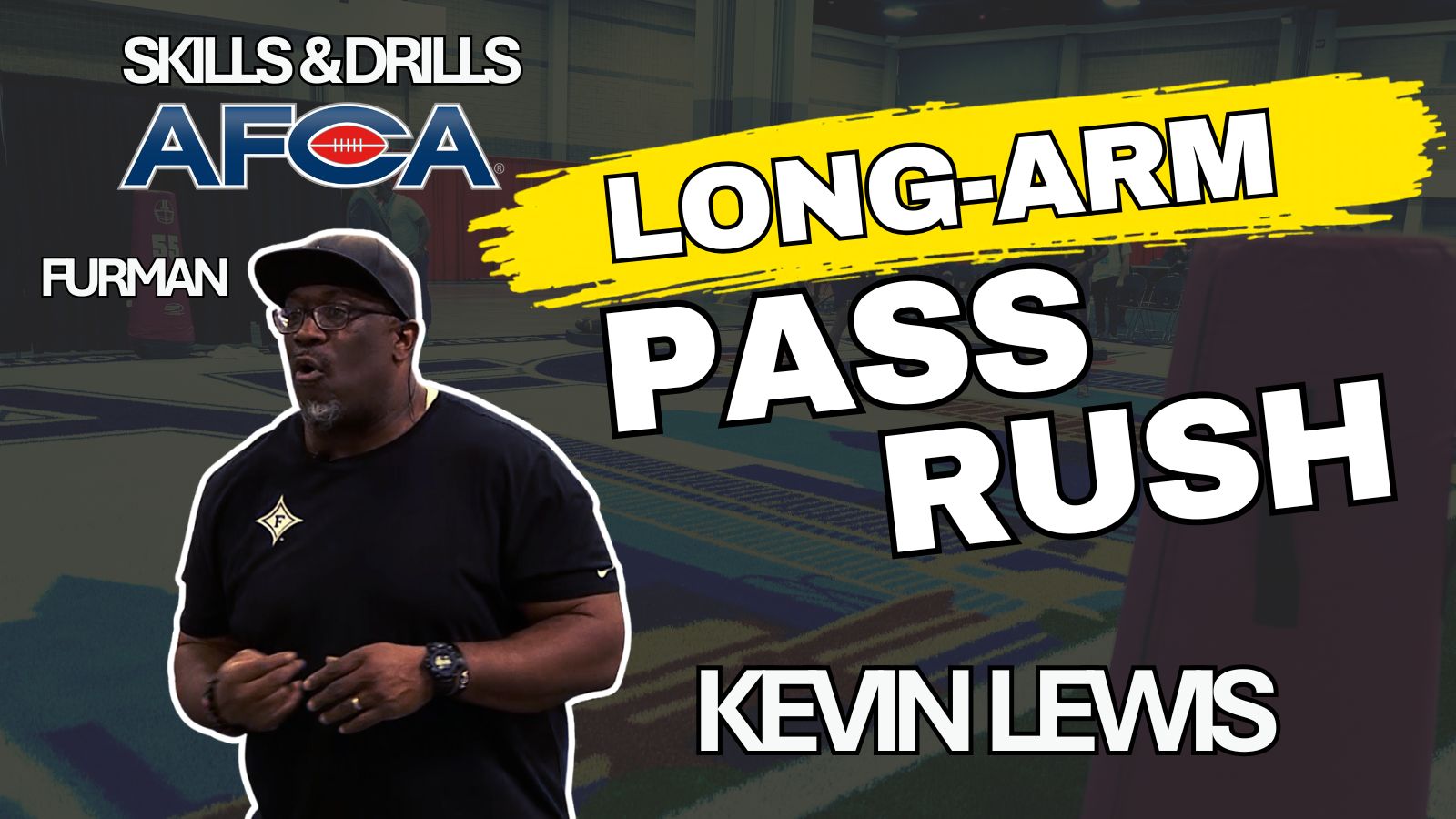
During a 2026 AFCA Convention Skills and Drills session, Furman University Defensive Line Coach Kevin Lewis emphasizes a back-to-basics approach, stating that “coaches must prioritize teaching and developing young men”. A core part of this development is building team depth, which is achieved by utilizing a strict teaching progression and working it until every player in the position group has mastered it.
One of the most effective tools in a defensive lineman’s arsenal is the long-arm pass rush. Coach Lewis breaks down this technique into a meticulous four-part teaching progression.
Phase 1: The Fit and the High Shoulder (“Two to One”)
Before the defensive lineman makes a move, the drill requires a good simulation from the bag holders. Bag holders must give ground grudgingly by holding the bag firmly against their body with their outside foot back, offering a realistic amount of pressure.
The pass rusher starts in the fit position, working “half man” on the outside half of the bag. Proper hand placement is crucial: the outside hand is placed on the tip of the shoulder pad (or bag), and the inside hand is placed squarely in the sternum. With elbows pinched tight and knees bent, the rusher explodes out of their hips, pushes the opponent’s shoulder high, and transitions from using two hands to just one. This “two-to-one” motion establishes the long-arm leverage.
Phase 2: The Release Moves
Once the long-arm is established, the rusher must shed the blocker. Coach Lewis teaches specific release moves from the “two to one” position, primarily focusing on the outside hand club rip and the elbow lift (also referred to as the forklift).
For the club rip, the rusher takes their outside hand, clubs the outside of the bag, and rips through. The lower body mechanics are just as vital: the rusher must dip the shoulder, point their toe, bend, and release. As they release off the block, they must aggressively reach with their outside hand. This reaching action forces the rusher’s hips to automatically point toward the quarterback, perfectly aligning them for the pursuit.
Alternatively, the rusher can use the elbow lift or “forklift” technique. This involves controlling the opponent’s arm by lifting their elbow high, followed by the same rip and reach mechanics to defeat the block.
Phase 3: The Counter Move
If the initial long-arm rush doesn’t cleanly beat the blocker, the rusher must counter. Furman’s defense uses a concept called “countering at the level” of the quarterback.
The goal is to avoid getting pushed completely past the depth of the quarterback. While working the long-arm (two to one), if the rusher feels the blocker overcommitting or extending, they will kick the blocker’s outside hand, flip their own hips, execute a club, and counter back inside toward the quarterback.
Phase 4: The Finish
A great pass rush means nothing if the defender cannot finish the play. The final portion of the progression focuses on the ability to bend and finish at the quarterback. In practice, this is often drilled using a hoop to simulate the required bend. The rusher works through the fit, executes their chosen release move (like the outside club or the forklift), bends around the edge, and finishes by reaching out to secure the bag or dummy.
By breaking down the long-arm pass rush into the fit, the release, the counter, and the finish, coaches can instill detailed fundamentals into their players. As Coach Lewis notes, a team is only as good as its worst player, which is why this progression must be drilled repeatedly until it becomes second nature for the entire depth chart.
2026 Convention Skills & Drills Are Now Live: CLICK HERE
As you prepare for Spring Ball, don’t stop with just one session. All 2026 Skills & Drills presentations from the AFCA Convention are now available in the AFCA Digital Library. AFCA members can log in to watch this tackling system in full, along with hundreds of additional position-specific sessions designed to help you build practice plans, install new drills, and sharpen fundamentals across your program.
If you’re looking to maximize your spring practice efficiency, the AFCA Digital Library is your year-round resource for proven drills, clinic tape, and coaching insight from every level of the game. Log in today and start building your Spring Ball practice script.

For more information about the AFCA, visit www.AFCA.com. For more interesting articles, check out The Insider and subscribe to our weekly email.
If you are interested in more in-depth articles and videos, please become an AFCA member. You can find out more information about membership and specific member benefits on the AFCA Membership Overview page. If you are ready to join, please fill out the AFCA Membership Application.
« « Previous PostNext Post » »
During a 2026 AFCA Convention Skills and Drills session, Furman University Defensive Line Coach Kevin Lewis emphasizes a back-to-basics approach, stating that “coaches must prioritize teaching and developing young men”. A core part of this development is building team depth, which is achieved by utilizing a strict teaching progression and working it until every player in the position group has mastered it.
One of the most effective tools in a defensive lineman’s arsenal is the long-arm pass rush. Coach Lewis breaks down this technique into a meticulous four-part teaching progression.
Phase 1: The Fit and the High Shoulder (“Two to One”)
Before the defensive lineman makes a move, the drill requires a good simulation from the bag holders. Bag holders must give ground grudgingly by holding the bag firmly against their body with their outside foot back, offering a realistic amount of pressure.
The pass rusher starts in the fit position, working “half man” on the outside half of the bag. Proper hand placement is crucial: the outside hand is placed on the tip of the shoulder pad (or bag), and the inside hand is placed squarely in the sternum. With elbows pinched tight and knees bent, the rusher explodes out of their hips, pushes the opponent’s shoulder high, and transitions from using two hands to just one. This “two-to-one” motion establishes the long-arm leverage.
Phase 2: The Release Moves
Once the long-arm is established, the rusher must shed the blocker. Coach Lewis teaches specific release moves from the “two to one” position, primarily focusing on the outside hand club rip and the elbow lift (also referred to as the forklift).
For the club rip, the rusher takes their outside hand, clubs the outside of the bag, and rips through. The lower body mechanics are just as vital: the rusher must dip the shoulder, point their toe, bend, and release. As they release off the block, they must aggressively reach with their outside hand. This reaching action forces the rusher’s hips to automatically point toward the quarterback, perfectly aligning them for the pursuit.
Alternatively, the rusher can use the elbow lift or “forklift” technique. This involves controlling the opponent’s arm by lifting their elbow high, followed by the same rip and reach mechanics to defeat the block.
Phase 3: The Counter Move
If the initial long-arm rush doesn’t cleanly beat the blocker, the rusher must counter. Furman’s defense uses a concept called “countering at the level” of the quarterback.
The goal is to avoid getting pushed completely past the depth of the quarterback. While working the long-arm (two to one), if the rusher feels the blocker overcommitting or extending, they will kick the blocker’s outside hand, flip their own hips, execute a club, and counter back inside toward the quarterback.
Phase 4: The Finish
A great pass rush means nothing if the defender cannot finish the play. The final portion of the progression focuses on the ability to bend and finish at the quarterback. In practice, this is often drilled using a hoop to simulate the required bend. The rusher works through the fit, executes their chosen release move (like the outside club or the forklift), bends around the edge, and finishes by reaching out to secure the bag or dummy.
By breaking down the long-arm pass rush into the fit, the release, the counter, and the finish, coaches can instill detailed fundamentals into their players. As Coach Lewis notes, a team is only as good as its worst player, which is why this progression must be drilled repeatedly until it becomes second nature for the entire depth chart.
2026 Convention Skills & Drills Are Now Live: CLICK HERE
As you prepare for Spring Ball, don’t stop with just one session. All 2026 Skills & Drills presentations from the AFCA Convention are now available in the AFCA Digital Library. AFCA members can log in to watch this tackling system in full, along with hundreds of additional position-specific sessions designed to help you build practice plans, install new drills, and sharpen fundamentals across your program.
If you’re looking to maximize your spring practice efficiency, the AFCA Digital Library is your year-round resource for proven drills, clinic tape, and coaching insight from every level of the game. Log in today and start building your Spring Ball practice script.
For more information about the AFCA, visit www.AFCA.com. For more interesting articles, check out The Insider and subscribe to our weekly email.
If you are interested in more in-depth articles and videos, please become an AFCA member. You can find out more information about membership and specific member benefits on the AFCA Membership Overview page. If you are ready to join, please fill out the AFCA Membership Application.