A Three-Phase Progression to Coaching the SCif Technique
March 2, 2026
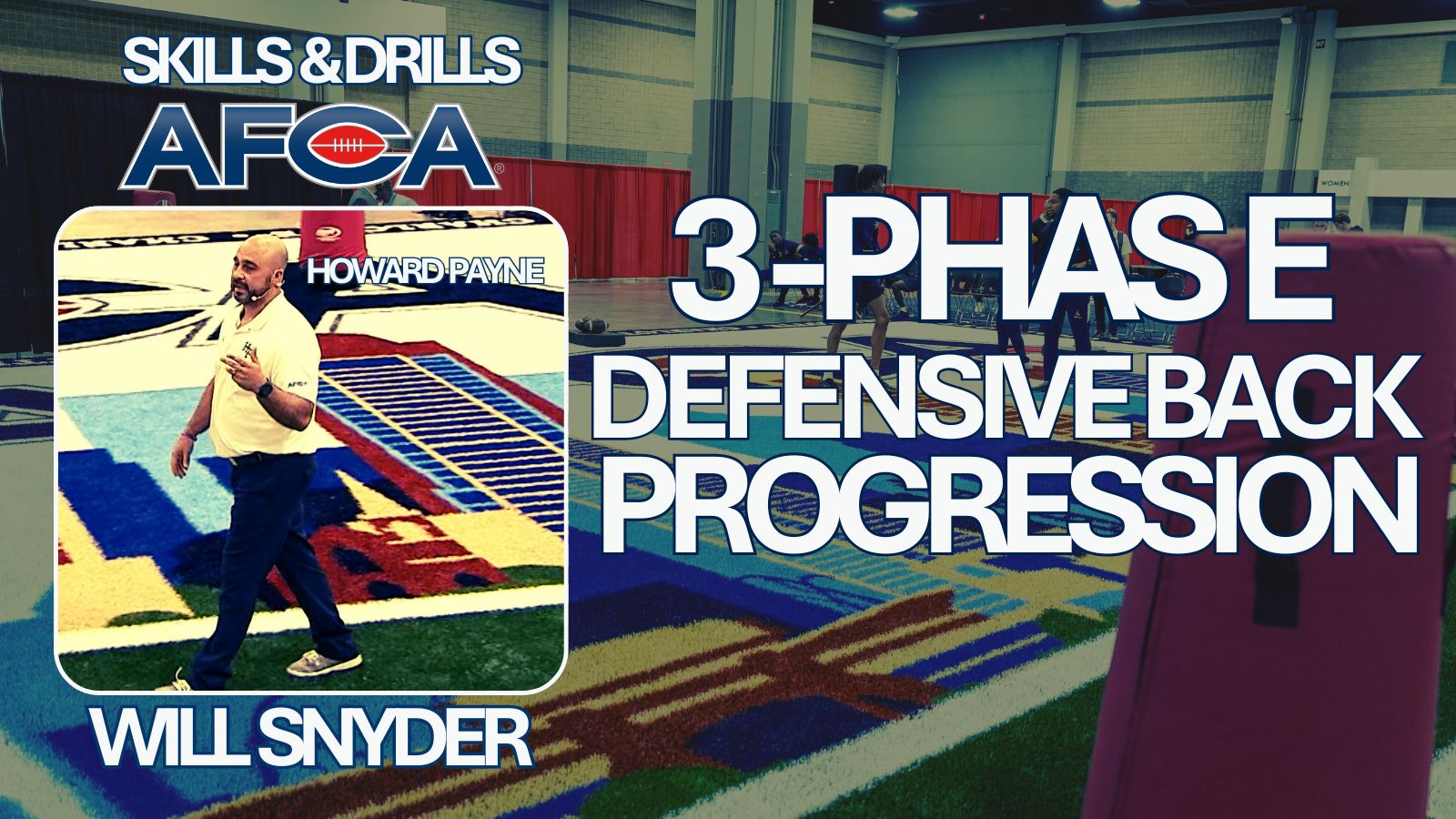
Will Snyder, the Defensive Coordinator at Howard Payne University, discusses his three- phase progression of the SCif technique at the 2026 AFCA Convention in Charlotte.
The fundamental goal of the SCif technique is to get hands-on with receivers. It is a versatile technique that can be implemented regardless of whether a defense uses a two-high, one-high, or no-high scheme. Coach Snyder emphasizes that defensive backs must play with a highly physical mindset so that receivers cannot easily avoid them off the line of scrimmage. By utilizing proper body mechanics, violence, and leverage, defenders aim to change a receiver’s direction, disrupt passing lanes, and ultimately create pass breakups (PBUs) and interceptions.
Breaking Down the Three Phases
The SCif technique is taught through a comprehensive, three-phase progression to ensure players master the fundamentals from the ground up.
-Phase One: Stance and Strike
-Phase Two: Roll Down and Carry
-Phase Three: Off Call and Takeaway
Phase One: Stance and Strike
Everything begins with a proper stance, which Snyder calls the “start of the finish”.
- Body Posture: Players must establish a good athletic base with their feet staggered. They are instructed to avoid slouching or arching their backs; instead, they must drop their butts and keep their chests up to maximize their explosion.
- The Strike: Using hand shields to simulate shoulder pads, players practice delivering a violent punch on the rise. To generate the most power, players must keep their elbows in tight and strike with their thumbs up, similar to throwing a chest pass in basketball.
- Extension: Defenders are taught to drive out fully on their extension without pausing, which is critical for changing the receiver’s course and direction.
Phase Two: Roll Down and Carry
The second phase introduces coverage movement, mimicking scenarios where a defender spins down into coverage.
- The Roll Down: Defenders roll straight down from their stance to a seven-yard landmark to initiate a collision. Snyder strictly coaches against “false steps” or wasted backward movements off the line; to fix this, he will literally place his foot behind a player to force them to roll forward. Players must also avoid stepping wide as they come down, which would open up throwing space for the quarterback.
- The Carry: After the collision, the defender establishes inside leverage and carries the receiver. A crucial coaching point is body positioning: the defender must position themselves so they can look directly through the receiver to see if a curl route is developing, keeping them ready to react.
Phase Three: Off Call and Takeaway
The final phase focuses on limiting the quarterback’s options and securing turnovers.
- The Passing Lane: On an “off” command from the coach, the defender comes off the collision, throttles down, and drops their hips. By putting themselves directly in the passing lane, the defender forces the quarterback to either throw a difficult touch pass over the top or throw the ball directly into the defender’s back (which counts as a pass breakup).
- The Takeaway: To finish the progression, Snyder incorporates a ball drill. After the “off” call, the coach yells “ball” and throws a pass, requiring the defender to complete the interception and sprint to simulate a touchdown return.
Ultimately, Coach Snyder believes mastering the SCif technique is essential because it directly empowers defensive backs to generate the tangible production, like takeaways and pass breakups, that they crave. By putting players in the best possible position to secure interceptions and score, this three-phase progression transforms a defense into a highly disruptive, playmaking unit.
2026 Convention Skills & Drills Are Now Live: CLICK HERE
As you prepare for Spring Ball, don’t stop with just one session. All 2026 Skills & Drills presentations from the AFCA Convention are now available in the AFCA Digital Library. AFCA members can log in to watch this tackling system in full, along with hundreds of additional position-specific sessions designed to help you build practice plans, install new drills, and sharpen fundamentals across your program.
If you’re looking to maximize your spring practice efficiency, the AFCA Digital Library is your year-round resource for proven drills, clinic tape, and coaching insight from every level of the game. Log in today and start building your Spring Ball practice script.
For more information about the AFCA, visit www.AFCA.com. For more interesting articles, check out The Insider and subscribe to our weekly email.
If you are interested in more in-depth articles and videos, please become an AFCA member. You can find out more information about membership and specific member benefits on the AFCA Membership Overview page. If you are ready to join, please fill out the AFCA Membership Application.
« « Previous PostNext Post » »
Will Snyder, the Defensive Coordinator at Howard Payne University, discusses his three- phase progression of the SCif technique at the 2026 AFCA Convention in Charlotte.
The fundamental goal of the SCif technique is to get hands-on with receivers. It is a versatile technique that can be implemented regardless of whether a defense uses a two-high, one-high, or no-high scheme. Coach Snyder emphasizes that defensive backs must play with a highly physical mindset so that receivers cannot easily avoid them off the line of scrimmage. By utilizing proper body mechanics, violence, and leverage, defenders aim to change a receiver’s direction, disrupt passing lanes, and ultimately create pass breakups (PBUs) and interceptions.
Breaking Down the Three Phases
The SCif technique is taught through a comprehensive, three-phase progression to ensure players master the fundamentals from the ground up.
-Phase One: Stance and Strike
-Phase Two: Roll Down and Carry
-Phase Three: Off Call and Takeaway
Phase One: Stance and Strike
Everything begins with a proper stance, which Snyder calls the “start of the finish”.
- Body Posture: Players must establish a good athletic base with their feet staggered. They are instructed to avoid slouching or arching their backs; instead, they must drop their butts and keep their chests up to maximize their explosion.
- The Strike: Using hand shields to simulate shoulder pads, players practice delivering a violent punch on the rise. To generate the most power, players must keep their elbows in tight and strike with their thumbs up, similar to throwing a chest pass in basketball.
- Extension: Defenders are taught to drive out fully on their extension without pausing, which is critical for changing the receiver’s course and direction.
Phase Two: Roll Down and Carry
The second phase introduces coverage movement, mimicking scenarios where a defender spins down into coverage.
- The Roll Down: Defenders roll straight down from their stance to a seven-yard landmark to initiate a collision. Snyder strictly coaches against “false steps” or wasted backward movements off the line; to fix this, he will literally place his foot behind a player to force them to roll forward. Players must also avoid stepping wide as they come down, which would open up throwing space for the quarterback.
- The Carry: After the collision, the defender establishes inside leverage and carries the receiver. A crucial coaching point is body positioning: the defender must position themselves so they can look directly through the receiver to see if a curl route is developing, keeping them ready to react.
Phase Three: Off Call and Takeaway
The final phase focuses on limiting the quarterback’s options and securing turnovers.
- The Passing Lane: On an “off” command from the coach, the defender comes off the collision, throttles down, and drops their hips. By putting themselves directly in the passing lane, the defender forces the quarterback to either throw a difficult touch pass over the top or throw the ball directly into the defender’s back (which counts as a pass breakup).
- The Takeaway: To finish the progression, Snyder incorporates a ball drill. After the “off” call, the coach yells “ball” and throws a pass, requiring the defender to complete the interception and sprint to simulate a touchdown return.
Ultimately, Coach Snyder believes mastering the SCif technique is essential because it directly empowers defensive backs to generate the tangible production, like takeaways and pass breakups, that they crave. By putting players in the best possible position to secure interceptions and score, this three-phase progression transforms a defense into a highly disruptive, playmaking unit.
2026 Convention Skills & Drills Are Now Live: CLICK HERE
As you prepare for Spring Ball, don’t stop with just one session. All 2026 Skills & Drills presentations from the AFCA Convention are now available in the AFCA Digital Library. AFCA members can log in to watch this tackling system in full, along with hundreds of additional position-specific sessions designed to help you build practice plans, install new drills, and sharpen fundamentals across your program.
If you’re looking to maximize your spring practice efficiency, the AFCA Digital Library is your year-round resource for proven drills, clinic tape, and coaching insight from every level of the game. Log in today and start building your Spring Ball practice script.
For more information about the AFCA, visit www.AFCA.com. For more interesting articles, check out The Insider and subscribe to our weekly email.
If you are interested in more in-depth articles and videos, please become an AFCA member. You can find out more information about membership and specific member benefits on the AFCA Membership Overview page. If you are ready to join, please fill out the AFCA Membership Application.