Mastering Quarterback Readiness with Reactive Pocket Movement Drills
April 28, 2026
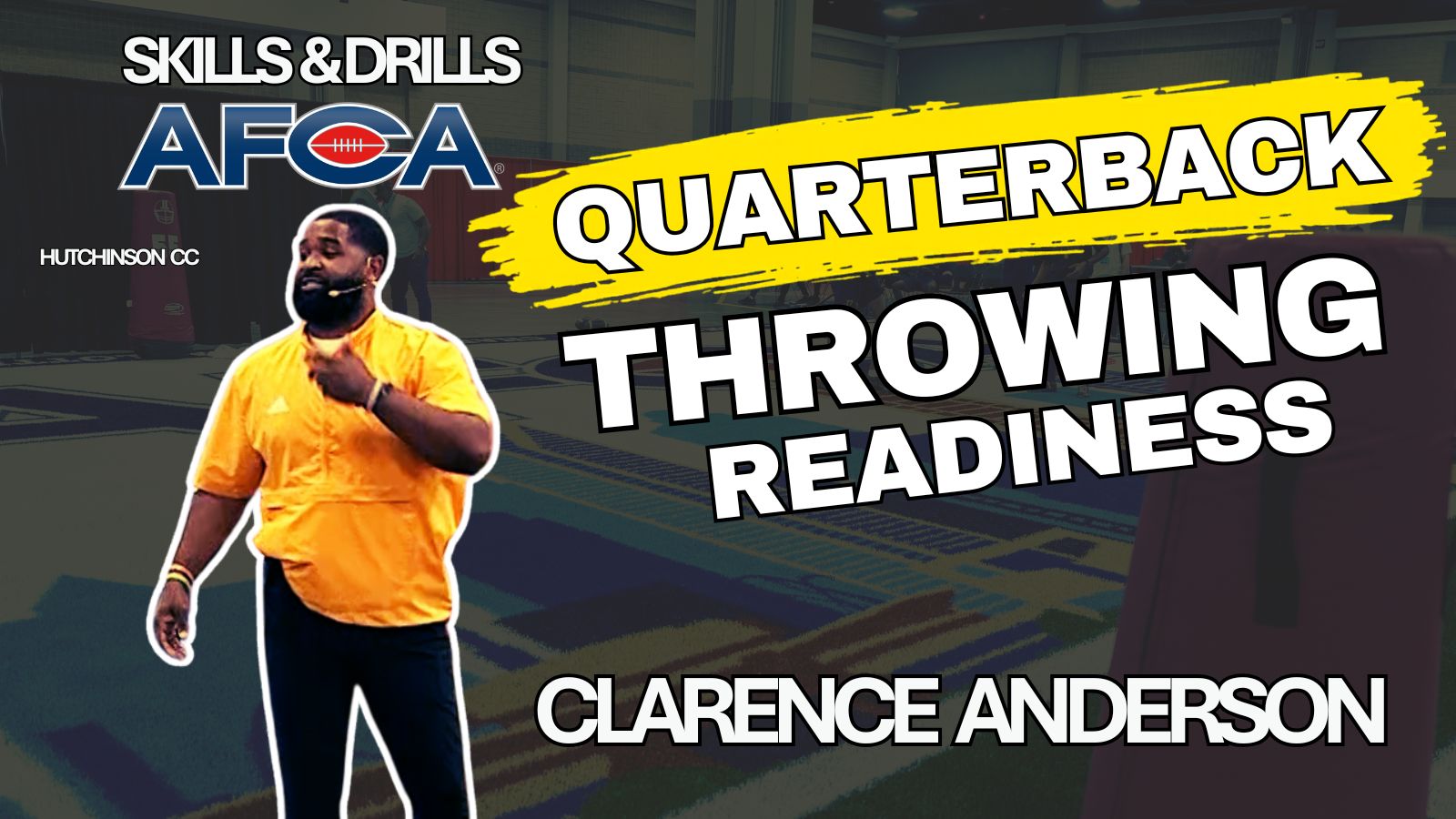
Hutchinson Community College passing game coordinator Clarence Anderson centers his coaching around a core philosophy: quarterback throwing readiness. Moving away from traditional, rigid footwork that can cause quarterbacks to be late on their throws, Anderson’s system emphasizes taking a “rock or read step” first. This ensures the passer is immediately ready to strike if a concept, such as a quick hitch or Y-cross, opens up right away.
To successfully execute a passing game built on exploiting leverage, numbers, and space, quarterbacks must be highly reactive. During the 2026 AFCA Convention in Charlotte, Coach Anderson breaks down the pocket movement and reactive throwing drills used to cultivate this essential readiness.
Drill 1: The Base Pocket Movement Warm-Up
This foundational drill uses an agile bag to help quarterbacks establish and maintain a base, ensuring they are underneath themselves and ready to throw at all times. The quarterback moves forward and backward alongside the bag for a total of six reps, letting the ball go on the final return to the middle.
Key Coaching Points:
- Maintain Base: Avoid the instinct to reach for the cone, which compromises balance.
- Tall Hips: Avoid the wide “duck stance” or sinking into “quicksand.” Quarterbacks must keep their hips tall to stay on top of the ball.
- Under Control: The feet shouldn’t move too fast; chaotic footwork leads to unbalanced throws. The goal is “controlled chaos”.
- The Two-Ball Variation: For quarterbacks with a long delivery or a habit of patting the ball before throwing, they hold a second football in their off-hand for support. This acts as a “comfort blanket” while naturally preventing the drastic, time-wasting ball-patting motion.
Reactive Progressions:
- Audible Reaction: Instead of a set number of reps, the quarterback moves forward and backward until the coach claps. Upon hearing the clap, they must snap off their movement immediately and throw, simulating reacting to an open route.
- Visual Reaction: The quarterback moves along the bag while watching downfield. Once the coach signals a receiver to uncover (using a thumbs-up), the quarterback must instantly recognize the open target, stop moving, and throw.
- Rapid Fire (Eye Training): The quarterback starts in the middle, catches a ball from a coach, throws it, and immediately catches another while moving back and forth. This trains the quarterback to catch the ball before moving, scan with their eyes, and get the ball out rapidly.
Drill 2: The Reactive Wave Drill
The classic wave drill is adapted to emphasize game-like implications and constant throwing readiness.
Key Coaching Points:
- Start with Cadence: The drill begins with a snap cadence (e.g., “Set, go”) to practice the initial tempo step before transitioning into the drop pedal.
- Aggressive Movement: Quarterbacks must be aggressive when working up in the pocket while remaining strong with the football.
- No Shuffling: Quarterbacks must stay underneath themselves without shuffling their feet, ensuring they never need an extra wasted step to generate power to throw.
Reactive Progressions:
- The Clap Reaction: Similar to the warm-up drill, the coach stands behind the quarterback and claps at random points during the wave movement. The quarterback must instantly snap and throw.
- Downfield Visual Reaction: The quarterback keeps their eyes downfield throughout the wave drill. As soon as a designated receiver uncovers, the quarterback stops what they are doing and lets the ball fly.
By focusing on these drills, coaches can create stressful, game-like situations in practice, ensuring their quarterbacks aren’t guessing, but rather relying on well-trained reactions to whatever the defense presents.
2026 Convention Skills & Drills Are Now Live: CLICK HERE
As you prepare for Spring Ball, don’t stop with just one session. All 2026 Skills & Drills presentations from the AFCA Convention are now available in the AFCA Digital Library. AFCA members can log in to watch this tackling system in full, along with hundreds of additional position-specific sessions designed to help you build practice plans, install new drills, and sharpen fundamentals across your program.
If you’re looking to maximize your spring practice efficiency, the AFCA Digital Library is your year-round resource for proven drills, clinic tape, and coaching insight from every level of the game. Log in today and start building your Spring Ball practice script.

For more information about the AFCA, visit www.AFCA.com. For more interesting articles, check out The Insider and subscribe to our weekly email.
If you are interested in more in-depth articles and videos, please become an AFCA member. You can find out more information about membership and specific member benefits on the AFCA Membership Overview page. If you are ready to join, please fill out the AFCA Membership Application.
« « Previous PostNext Post » »
Hutchinson Community College passing game coordinator Clarence Anderson centers his coaching around a core philosophy: quarterback throwing readiness. Moving away from traditional, rigid footwork that can cause quarterbacks to be late on their throws, Anderson’s system emphasizes taking a “rock or read step” first. This ensures the passer is immediately ready to strike if a concept, such as a quick hitch or Y-cross, opens up right away.
To successfully execute a passing game built on exploiting leverage, numbers, and space, quarterbacks must be highly reactive. During the 2026 AFCA Convention in Charlotte, Coach Anderson breaks down the pocket movement and reactive throwing drills used to cultivate this essential readiness.
Drill 1: The Base Pocket Movement Warm-Up
This foundational drill uses an agile bag to help quarterbacks establish and maintain a base, ensuring they are underneath themselves and ready to throw at all times. The quarterback moves forward and backward alongside the bag for a total of six reps, letting the ball go on the final return to the middle.
Key Coaching Points:
- Maintain Base: Avoid the instinct to reach for the cone, which compromises balance.
- Tall Hips: Avoid the wide “duck stance” or sinking into “quicksand.” Quarterbacks must keep their hips tall to stay on top of the ball.
- Under Control: The feet shouldn’t move too fast; chaotic footwork leads to unbalanced throws. The goal is “controlled chaos”.
- The Two-Ball Variation: For quarterbacks with a long delivery or a habit of patting the ball before throwing, they hold a second football in their off-hand for support. This acts as a “comfort blanket” while naturally preventing the drastic, time-wasting ball-patting motion.
Reactive Progressions:
- Audible Reaction: Instead of a set number of reps, the quarterback moves forward and backward until the coach claps. Upon hearing the clap, they must snap off their movement immediately and throw, simulating reacting to an open route.
- Visual Reaction: The quarterback moves along the bag while watching downfield. Once the coach signals a receiver to uncover (using a thumbs-up), the quarterback must instantly recognize the open target, stop moving, and throw.
- Rapid Fire (Eye Training): The quarterback starts in the middle, catches a ball from a coach, throws it, and immediately catches another while moving back and forth. This trains the quarterback to catch the ball before moving, scan with their eyes, and get the ball out rapidly.
Drill 2: The Reactive Wave Drill
The classic wave drill is adapted to emphasize game-like implications and constant throwing readiness.
Key Coaching Points:
- Start with Cadence: The drill begins with a snap cadence (e.g., “Set, go”) to practice the initial tempo step before transitioning into the drop pedal.
- Aggressive Movement: Quarterbacks must be aggressive when working up in the pocket while remaining strong with the football.
- No Shuffling: Quarterbacks must stay underneath themselves without shuffling their feet, ensuring they never need an extra wasted step to generate power to throw.
Reactive Progressions:
- The Clap Reaction: Similar to the warm-up drill, the coach stands behind the quarterback and claps at random points during the wave movement. The quarterback must instantly snap and throw.
- Downfield Visual Reaction: The quarterback keeps their eyes downfield throughout the wave drill. As soon as a designated receiver uncovers, the quarterback stops what they are doing and lets the ball fly.
By focusing on these drills, coaches can create stressful, game-like situations in practice, ensuring their quarterbacks aren’t guessing, but rather relying on well-trained reactions to whatever the defense presents.
2026 Convention Skills & Drills Are Now Live: CLICK HERE
As you prepare for Spring Ball, don’t stop with just one session. All 2026 Skills & Drills presentations from the AFCA Convention are now available in the AFCA Digital Library. AFCA members can log in to watch this tackling system in full, along with hundreds of additional position-specific sessions designed to help you build practice plans, install new drills, and sharpen fundamentals across your program.
If you’re looking to maximize your spring practice efficiency, the AFCA Digital Library is your year-round resource for proven drills, clinic tape, and coaching insight from every level of the game. Log in today and start building your Spring Ball practice script.
For more information about the AFCA, visit www.AFCA.com. For more interesting articles, check out The Insider and subscribe to our weekly email.
If you are interested in more in-depth articles and videos, please become an AFCA member. You can find out more information about membership and specific member benefits on the AFCA Membership Overview page. If you are ready to join, please fill out the AFCA Membership Application.