The “Take Three” Turnover Circuit
April 7, 2026
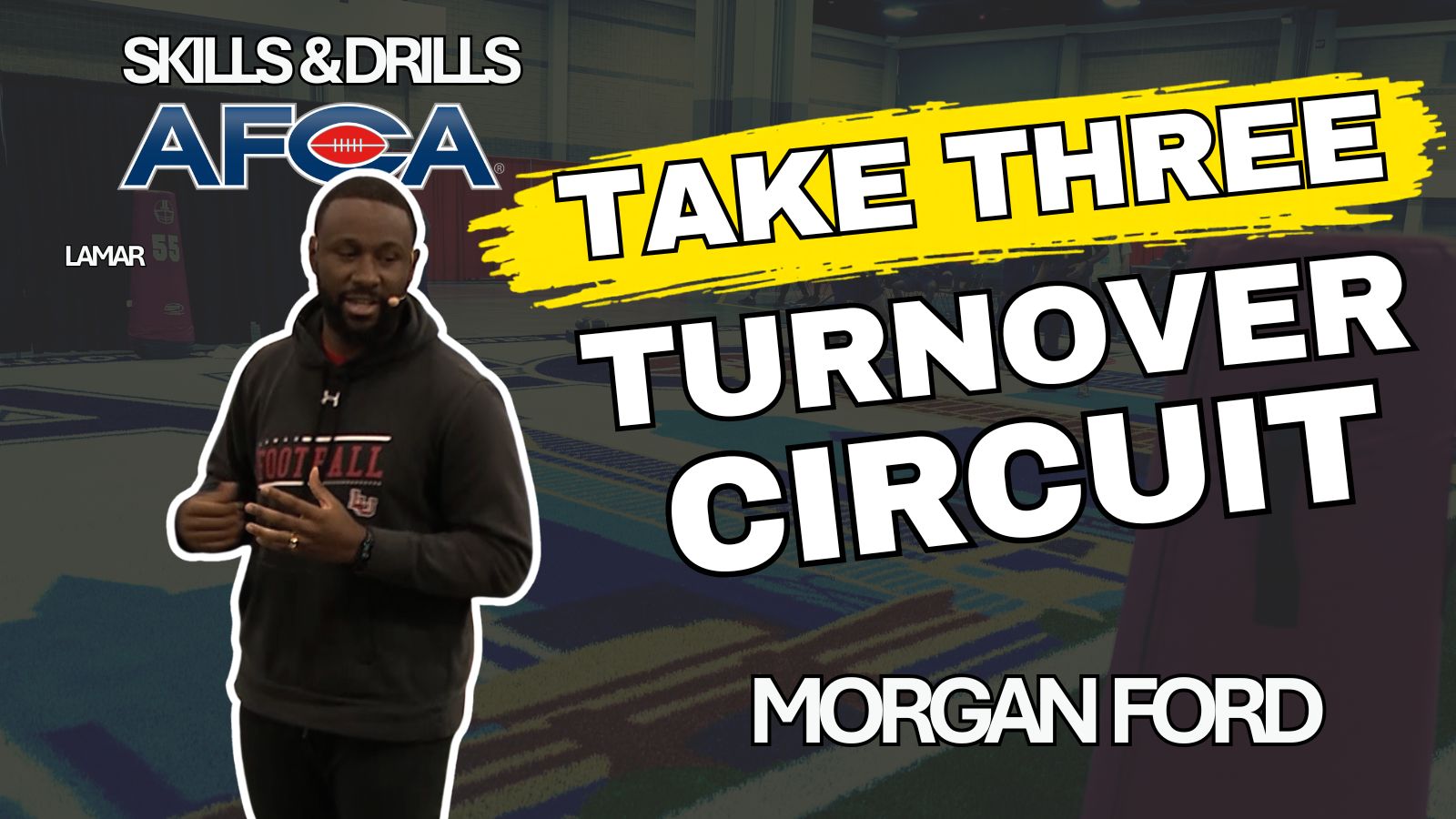
Generating turnovers is a fundamental key to defensive success on the football field. At Lamar University, the defensive philosophy revolves around creating turnovers, a concept they call “Take Three”. Coach Morgan Ford, who helped lead his FCS team to a 25th national ranking in turnovers, emphasizes that defenders must master specific techniques for every turnover opportunity: whether the ball is in the air, on the ground, or secured by a ball carrier in frontal or trailing positions. Here is a breakdown of Coach Morgan’s Skills and Drills session during the 2026 AFCA Convention.
Miss the Wrist and Tip
When defending passes, wrist placement dictates exactly where a tipped ball will travel. Defenders practice deflecting the ball to a teammate positioned ten yards away. There are three main wrist techniques:
- Swatting the ball behind
- Using flat palms to pop the ball high into the air
- Using the fat part of the hand to swat the ball downward in front.
The PHP Circuit: Punch, Hammer, and Pull
To strip the ball from a runner, defenders utilize the PHP (Punch, Hammer, Pull) circuit.
- Punch (Frontal Position): Approaching from a 45-degree angle with their eyes on the runner’s near hip, the defender secures the tackle by driving an elbow into the gut and placing the runner’s chin on their own shoulder. The defender must strike violently, putting their hips and elbow directly into the punch to force the ball out.
- Pull (Behind Position): When trailing a ball carrier, the defender secures the tackle by putting a hand on the runner’s shoulder. They then grab the tip of the football and turn it to force a fumble, a stripping motion described as “peeling the clothes off the banana”.
- Hammer (Behind Position): Defenders can also use a hammer technique, driving the ball of their fist with a downward force onto the ball and the runner’s hip. Alternatively, defenders can utilize an uppercut motion, driving their knuckles upward through the ball to pop it loose.
City Ball vs. Country Ball
Recovering a fumble safely and effectively depends on the amount of surrounding traffic. Defenders should never approach a loose ground ball straight on; instead, they should approach “half a man” with “Z’s” (bends) in their ankles and knees to either fall on it or scoop it up.
- City Ball: Used in heavily crowded situations, like highly populated cities. The defender must roll over the ball, curling up with their knees and elbows tucked tightly to their chest to securely protect the football from opposing players.
- Country Ball: Used in open space with fewer players around, similar to smaller “country” towns. When the ball is loose in the open field with erratic bounces, defenders are taught to aggressively scoop the ball and attempt to score
2026 Convention Skills & Drills Are Now Live: CLICK HERE
As you prepare for Spring Ball, don’t stop with just one session. All 2026 Skills & Drills presentations from the AFCA Convention are now available in the AFCA Digital Library. AFCA members can log in to watch this tackling system in full, along with hundreds of additional position-specific sessions designed to help you build practice plans, install new drills, and sharpen fundamentals across your program.
If you’re looking to maximize your spring practice efficiency, the AFCA Digital Library is your year-round resource for proven drills, clinic tape, and coaching insight from every level of the game. Log in today and start building your Spring Ball practice script.

For more information about the AFCA, visit www.AFCA.com. For more interesting articles, check out The Insider and subscribe to our weekly email.
If you are interested in more in-depth articles and videos, please become an AFCA member. You can find out more information about membership and specific member benefits on the AFCA Membership Overview page. If you are ready to join, please fill out the AFCA Membership Application.
« « Previous PostNext Post » »
Generating turnovers is a fundamental key to defensive success on the football field. At Lamar University, the defensive philosophy revolves around creating turnovers, a concept they call “Take Three”. Coach Morgan Ford, who helped lead his FCS team to a 25th national ranking in turnovers, emphasizes that defenders must master specific techniques for every turnover opportunity: whether the ball is in the air, on the ground, or secured by a ball carrier in frontal or trailing positions. Here is a breakdown of Coach Morgan’s Skills and Drills session during the 2026 AFCA Convention.
Miss the Wrist and Tip
When defending passes, wrist placement dictates exactly where a tipped ball will travel. Defenders practice deflecting the ball to a teammate positioned ten yards away. There are three main wrist techniques:
- Swatting the ball behind
- Using flat palms to pop the ball high into the air
- Using the fat part of the hand to swat the ball downward in front.
The PHP Circuit: Punch, Hammer, and Pull
To strip the ball from a runner, defenders utilize the PHP (Punch, Hammer, Pull) circuit.
- Punch (Frontal Position): Approaching from a 45-degree angle with their eyes on the runner’s near hip, the defender secures the tackle by driving an elbow into the gut and placing the runner’s chin on their own shoulder. The defender must strike violently, putting their hips and elbow directly into the punch to force the ball out.
- Pull (Behind Position): When trailing a ball carrier, the defender secures the tackle by putting a hand on the runner’s shoulder. They then grab the tip of the football and turn it to force a fumble, a stripping motion described as “peeling the clothes off the banana”.
- Hammer (Behind Position): Defenders can also use a hammer technique, driving the ball of their fist with a downward force onto the ball and the runner’s hip. Alternatively, defenders can utilize an uppercut motion, driving their knuckles upward through the ball to pop it loose.
City Ball vs. Country Ball
Recovering a fumble safely and effectively depends on the amount of surrounding traffic. Defenders should never approach a loose ground ball straight on; instead, they should approach “half a man” with “Z’s” (bends) in their ankles and knees to either fall on it or scoop it up.
- City Ball: Used in heavily crowded situations, like highly populated cities. The defender must roll over the ball, curling up with their knees and elbows tucked tightly to their chest to securely protect the football from opposing players.
- Country Ball: Used in open space with fewer players around, similar to smaller “country” towns. When the ball is loose in the open field with erratic bounces, defenders are taught to aggressively scoop the ball and attempt to score
2026 Convention Skills & Drills Are Now Live: CLICK HERE
As you prepare for Spring Ball, don’t stop with just one session. All 2026 Skills & Drills presentations from the AFCA Convention are now available in the AFCA Digital Library. AFCA members can log in to watch this tackling system in full, along with hundreds of additional position-specific sessions designed to help you build practice plans, install new drills, and sharpen fundamentals across your program.
If you’re looking to maximize your spring practice efficiency, the AFCA Digital Library is your year-round resource for proven drills, clinic tape, and coaching insight from every level of the game. Log in today and start building your Spring Ball practice script.
For more information about the AFCA, visit www.AFCA.com. For more interesting articles, check out The Insider and subscribe to our weekly email.
If you are interested in more in-depth articles and videos, please become an AFCA member. You can find out more information about membership and specific member benefits on the AFCA Membership Overview page. If you are ready to join, please fill out the AFCA Membership Application.